culture
Ingo Maurer, the seducer of light
Share
Share icone
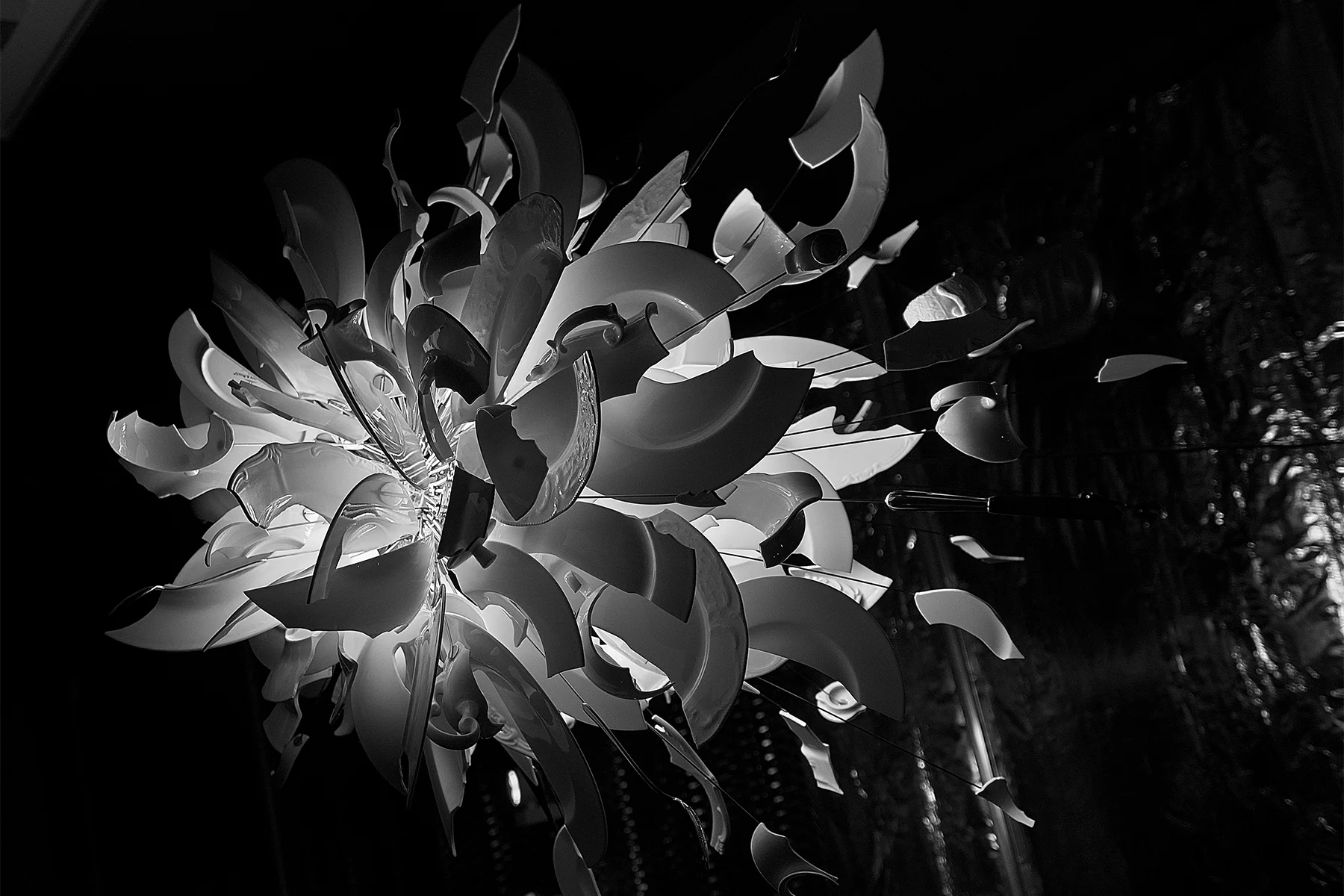
Porca Miseria!, 1994 | Ingo Maurer
Jl FilpoC, CC BY-SA 4.0, via Wikimedia Commons
Ingo Maurer (1932-2019) changed, with his poetic, ironic and playful look, the world of lighting devices. Maurer, who was both the designer and manufacturer of his own lamps — still made today in his factory in Bavaria — was also a master of innovation, curious and skilled experimenter with materials and types of lighting.

Legend has it that it all began when he went fishing with his father, on Lake Constance. Ingo Maurer is fascinated by the effects of light on the water surface, but also by the surrounding nature — so much so that clouds, birds and leaves will inspire many of his designs.

In his projects, intuition and technique will always be in perfect balance. It is no coincidence that his first success in the world of design, now part of the MoMA's permanent collection, is Bulb, a lamp based on the classic and traditional Edison bulb. An archetype born in a dream in Venice and created the next day in the furnaces of Murano, which shows once and for all how thin, for Maurer, the border between art, craftsmanship and design is. But Bulb is also the embodiment of another aspect of Maurer's philosophy: the idea that the important thing, in a lamp, is light, rather than form. “[Light] is the fourth dimension. Something spiritual, mystical, closely connected with our well-being,” he said in one of the last interviews, in 2015 for Living. A theme that has been recurring in his work, becoming a new paradigm for the lighting industry.
Pollux | Ingo Maurer
Jula2812, CC BY-SA 4.0, via Wikimedia Common
An entrepreneur before he was a designer, Ingo Maurer was also a company. And although there is no doubt that his genius was the basis of everything, it was his entrepreneurial capacity, the desire to involve and value his collaborators, and the intuition to step aside for the common good that made his ideas great. Speaking about his creative workshop at the Corriere della Sera, in 2018, Maurer said: “It's my chaos full of fairytales. I was able to create a team that I consider a bouquet composed of many different flowers.”

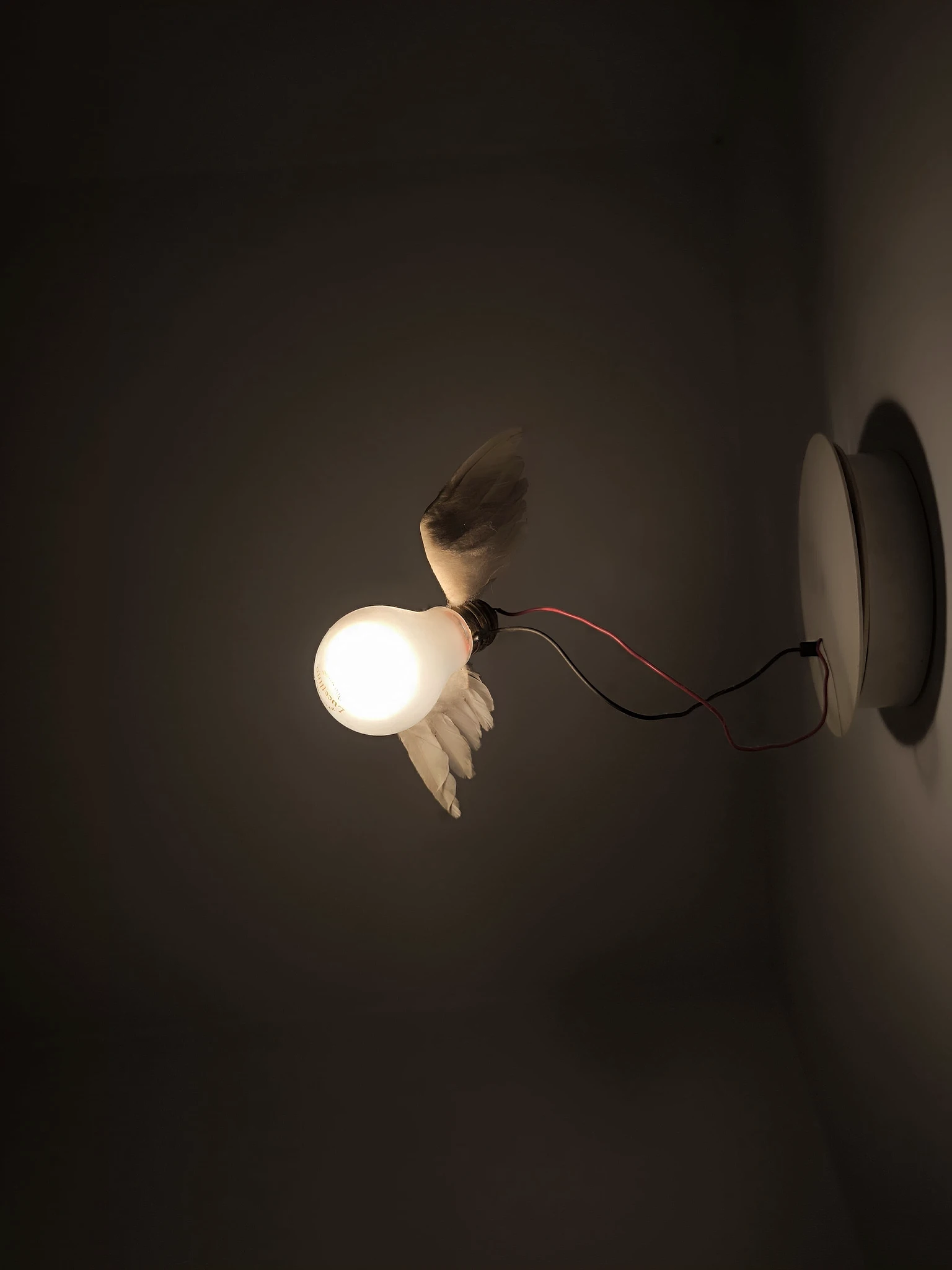
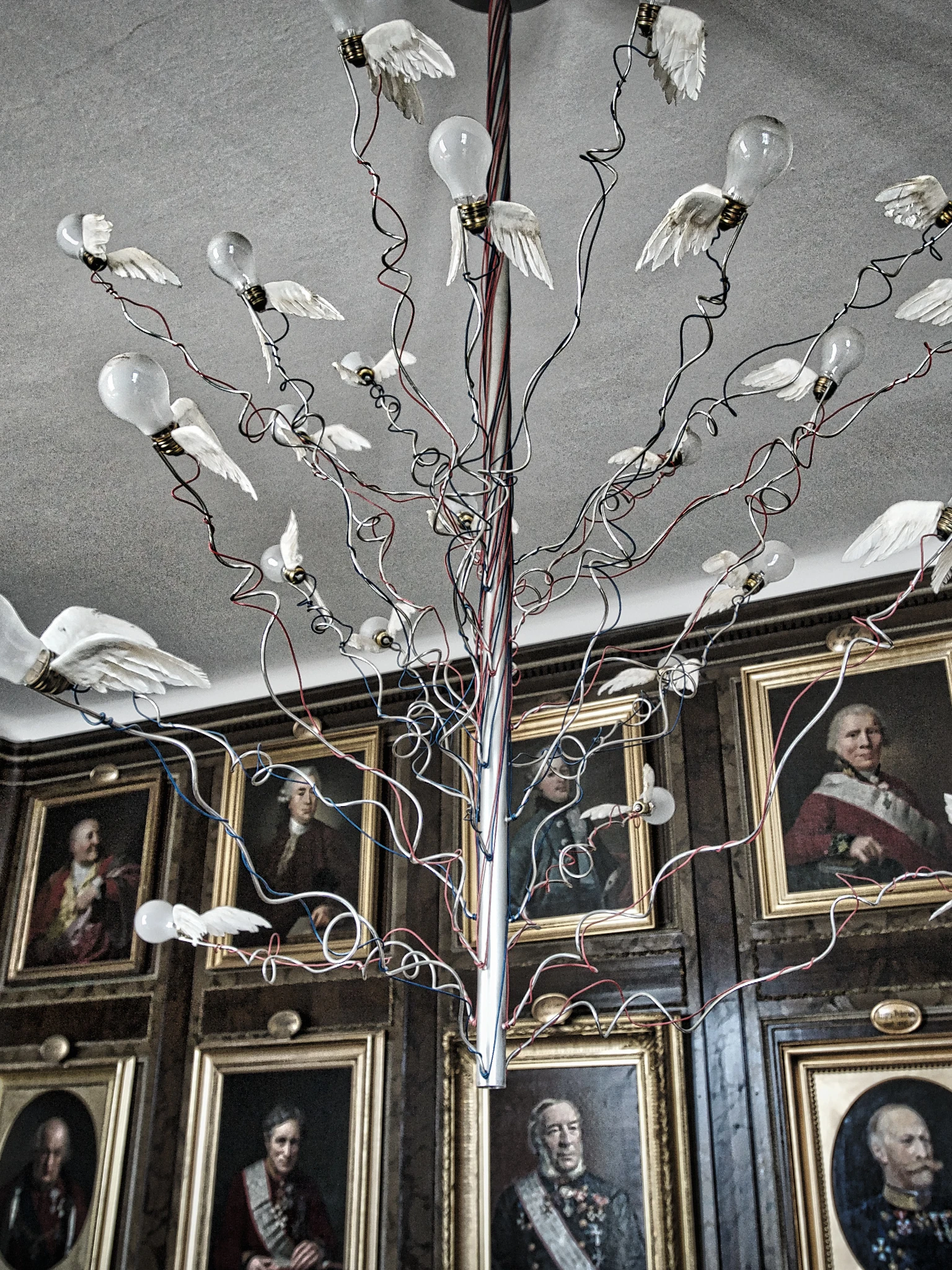
Throughout his career, places and encounters will remain a source of inspiration: from Japanese origami to the artist Alexander Calder's Mobiles, from the imaginary of pop culture to ready-made, to minimal art. Among the more than 200 pieces designed and produced over fifty years, the best known are perhaps Lucellino, a light bulb with wings, a masterpiece of poetry and delicacy declined in dozens of variants; the YaYaHo system that the user can modify as desired, and which, among other things, introduced low-voltage chain lights to Europe; the Campari Light, a lamp made with the iconic Campari bottles designed by Fortunato Depero and the Canned Light, a tribute to Andy Warhol and his Campbell soups. Other emblematic projects are the Zettel's lamp and the Holonzki wall lamp, which show its sensitivity to the presence/absence of light. His favorite lamp, however, remained the one designed for his wife: a sign that for him work and love were strongly interconnected, indeed, that work was a way of expressing love.
Lucellino, 1992 | Ingo Maurer
VJOHSJENS, CC BY-SA 4.0, via Wikimedia Common
Ingo Maurer was also a pioneer of new technologies. In addition to the already mentioned chain of low-voltage lights, which paved the way for many subsequent interpretations, Maurer was the first to use LED technology in table lamps, then OLEDs in 2006. In his lamps, the installation of the elements is astounding — simple, essential and honest, without technical superstructures. Thanks to the constant confrontation with his technicians, he gave them space to express themselves and experiment, exalting the work of the team.

Of his work, the designer Alessandro Mendini said: “Maurer doesn't design lamps like any normal, typical designer does. Maurer 'uses' bulbs (of all types), combines them, exploits them, mounts them together, disassembles them, divides them, etc., for objectives and purposes that have nothing directly to do with the intention of 'designing a lamp as a tool for making light'. [...] A light not of recollection, but rather a nervous energy of dispersion”.
Nomos lamp | Incalmi
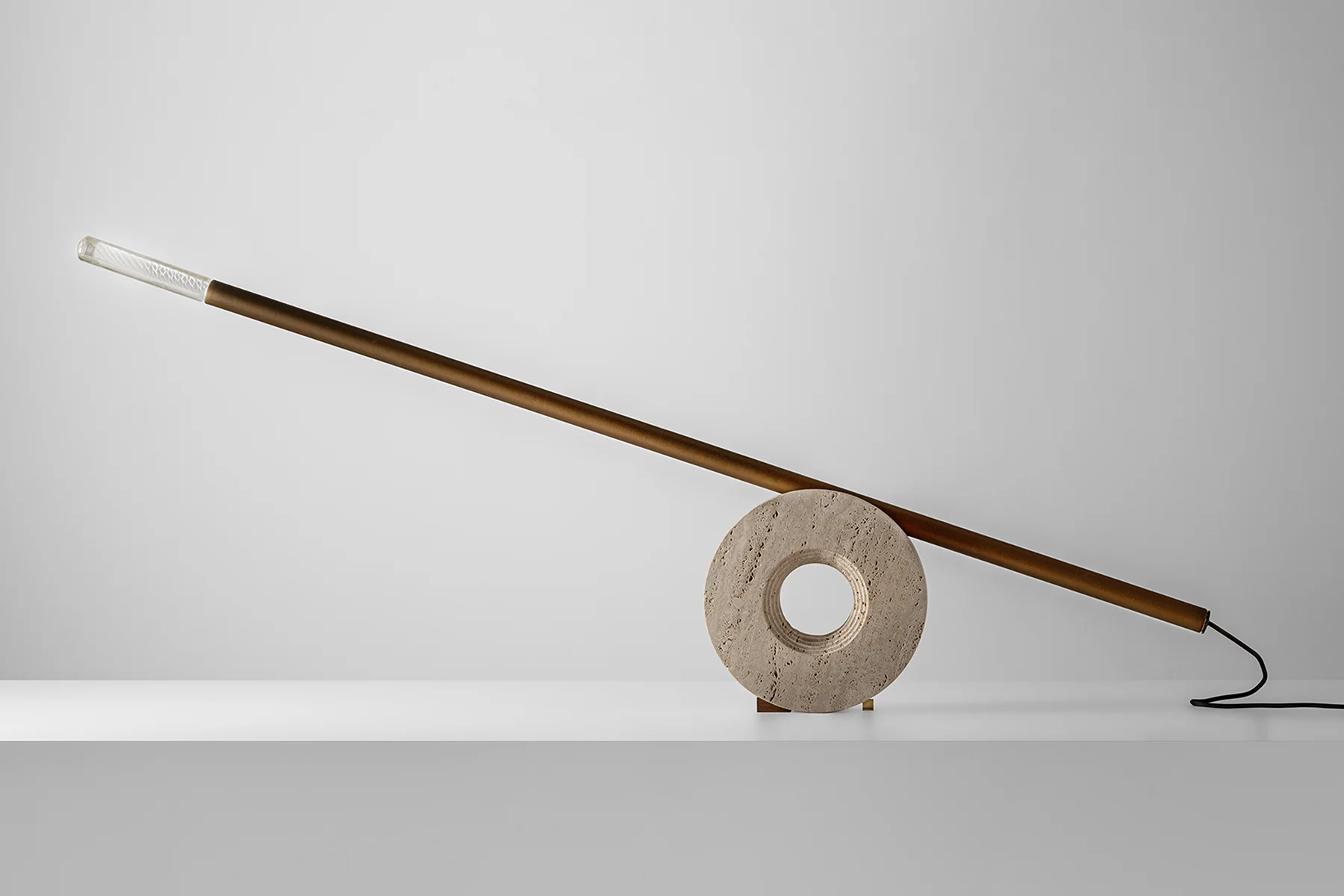
Of great inspiration, for Incalmi, were in particular the YaYaHo system and the Keep Balance lamp, which draws its inspiration from the circus world. The theme of gesture, balance and interaction with the user inspired one of the lamps in the collection — the Nomos — who also owes to Ingo Maurer the choice of simple shapes and the daring material experimentation. The issue of light transmission is also fundamental: for Maurer it was not something to hide, but to value. For this reason, its lamps, circuits and other technical details are often left unseen, or become aesthetic, almost decorative: an idea that inspired our ongoing research on copper circuits, our material of choice.
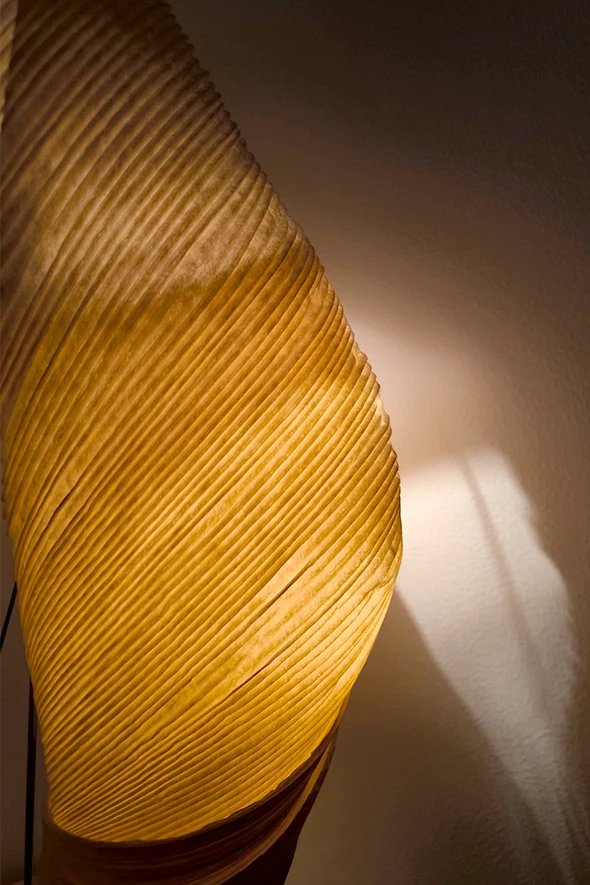
My New Flame | Ingo Maurer
Alchillumi, CC BY-SA 4.0, via Wikimedia Common
Like Maurer, Incalmi also believes in the value of tailor-made projects. Among the many site-specific creations created by the German designer, what always struck us was the Golden Ribbon lamp, designed for Casa Botines by Antoni Gaudí in Leon, Spain. A simple metal ribbon suspended from the ceiling, which evokes a ray of light. A luminous object that is a work of art in its own right. But beyond the products, it is above all his design philosophy, the playful approach to design and his entrepreneurial generosity that are a constant source of inspiration for us.
Kruisherenhotel Maastricht, luminous sculptures by Ingo Maurer in the cloister of the former convent
Henk Monster, CC BY 3.0, via Wikimedia Common
Related objects